
The Informed Investor · Chapter Eight
Why real estate asks more of your judgment before you buy — not after.
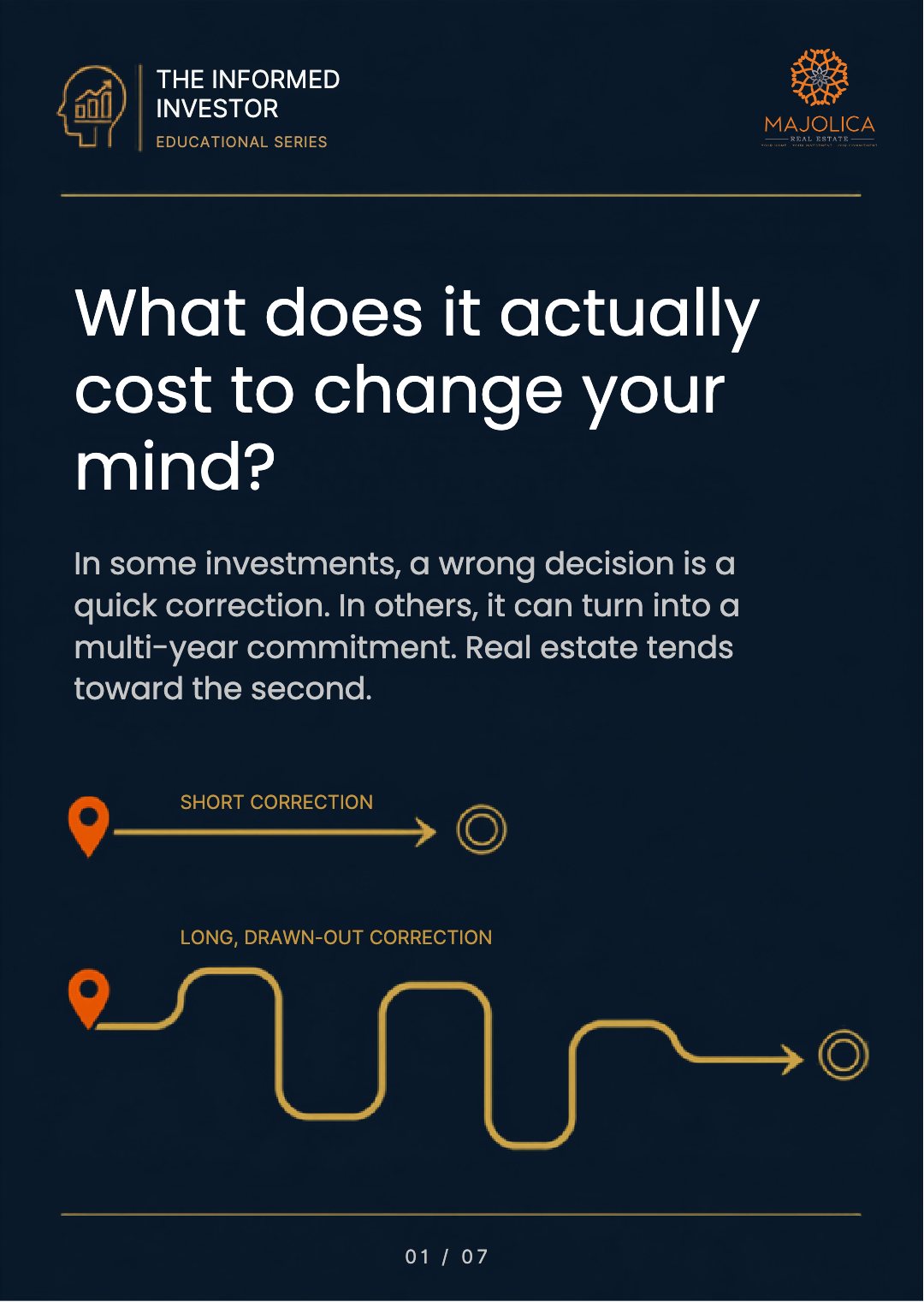
What does it actually cost to change your mind?
In some investments, a wrong decision is a quick correction. In others, it can turn into a multi-year commitment. Real estate tends toward the second.
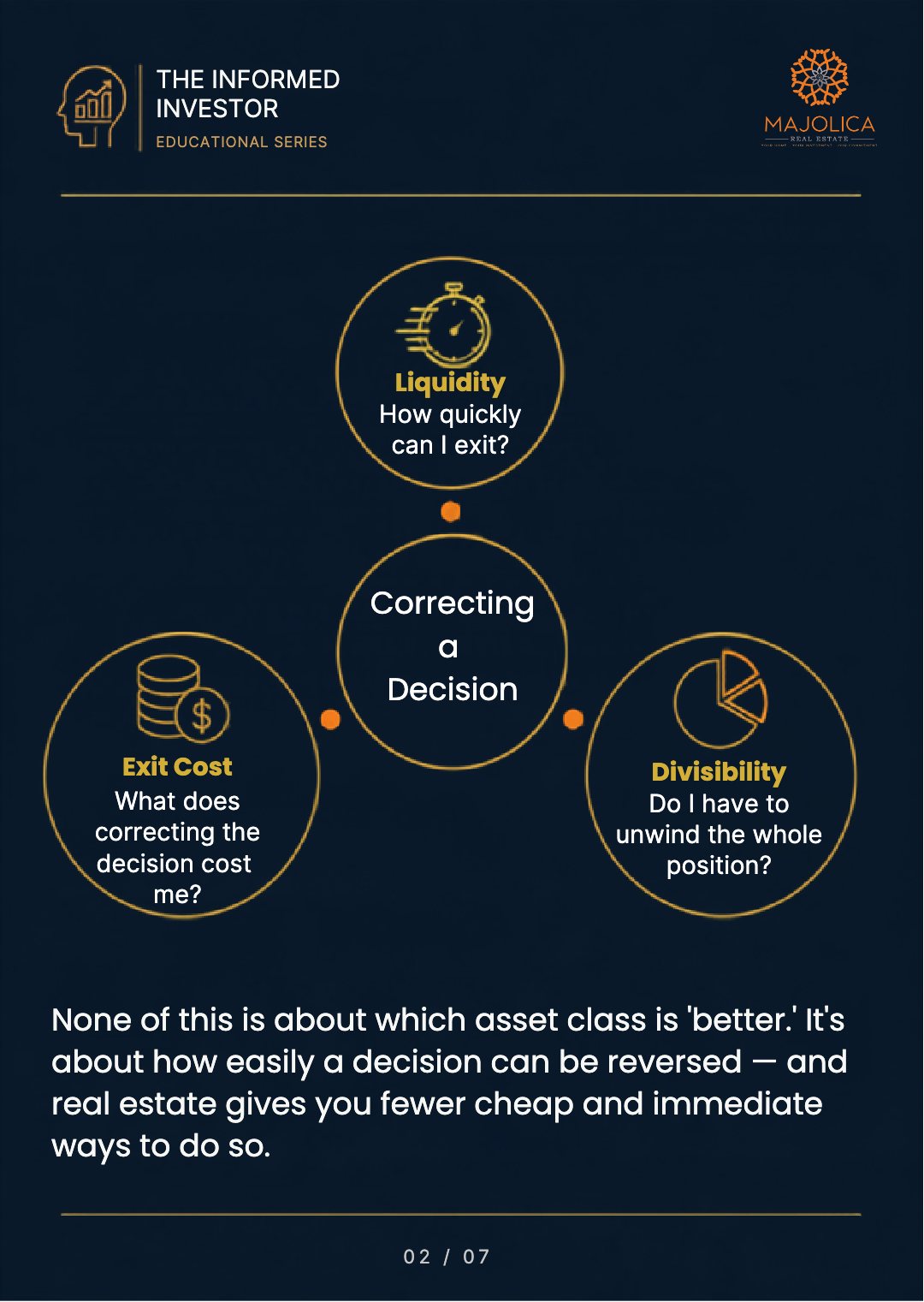
Correcting a decision
- Liquidity — How quickly can I exit?
- Exit cost — What does correcting the decision cost me?
- Divisibility — Do I have to unwind the whole position?
None of this is about which asset class is ‘better.’ It’s about how easily a decision can be reversed — and real estate gives you fewer cheap and immediate ways to do so.
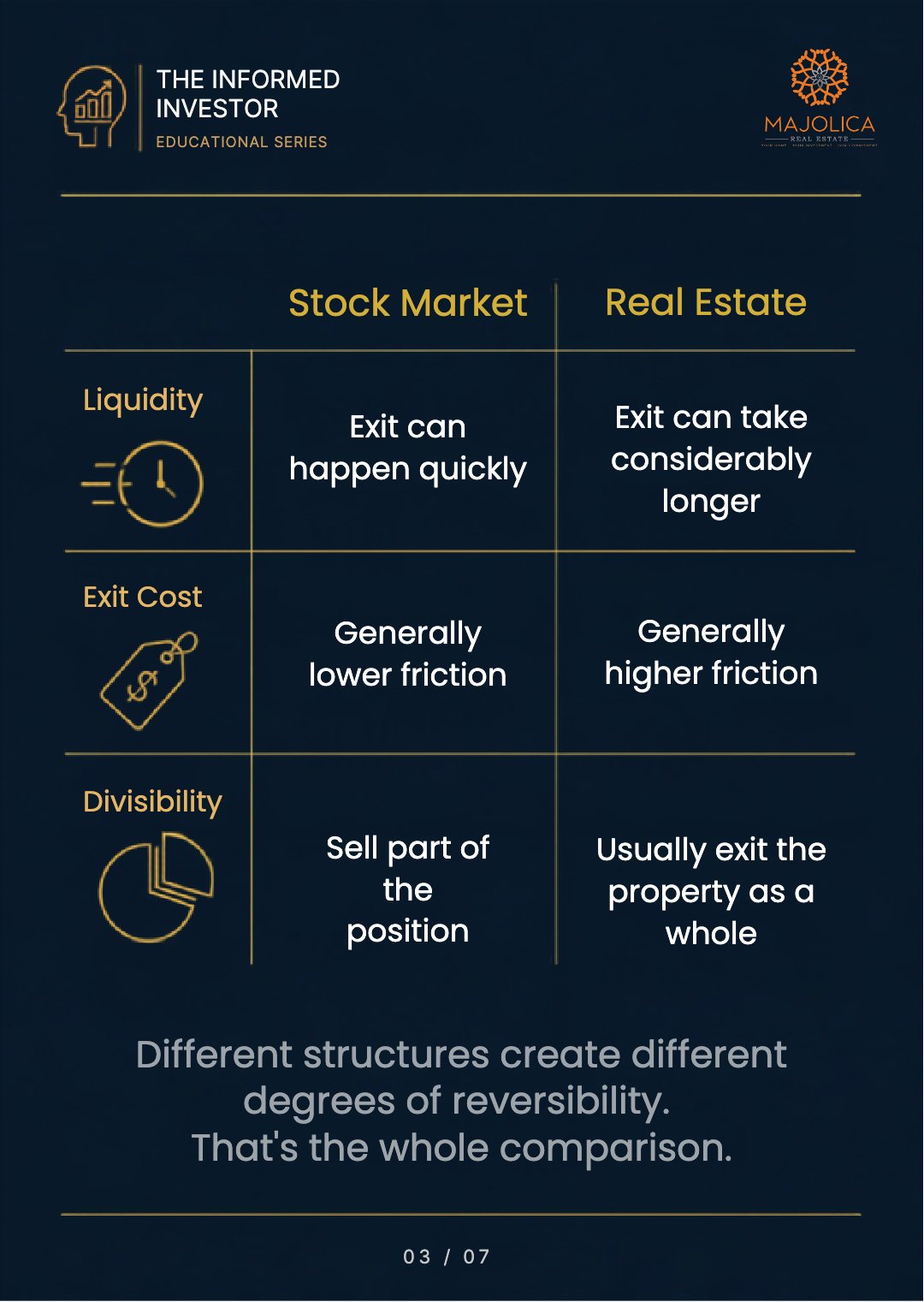
Different structures create different degrees of reversibility
| Stock market | Real estate | |
|---|---|---|
| Liquidity | Exit can happen quickly | Exit can take considerably longer |
| Exit cost | Generally lower friction | Generally higher friction |
| Divisibility | Sell part of the position | Usually exit the property as a whole |
That’s the whole comparison.
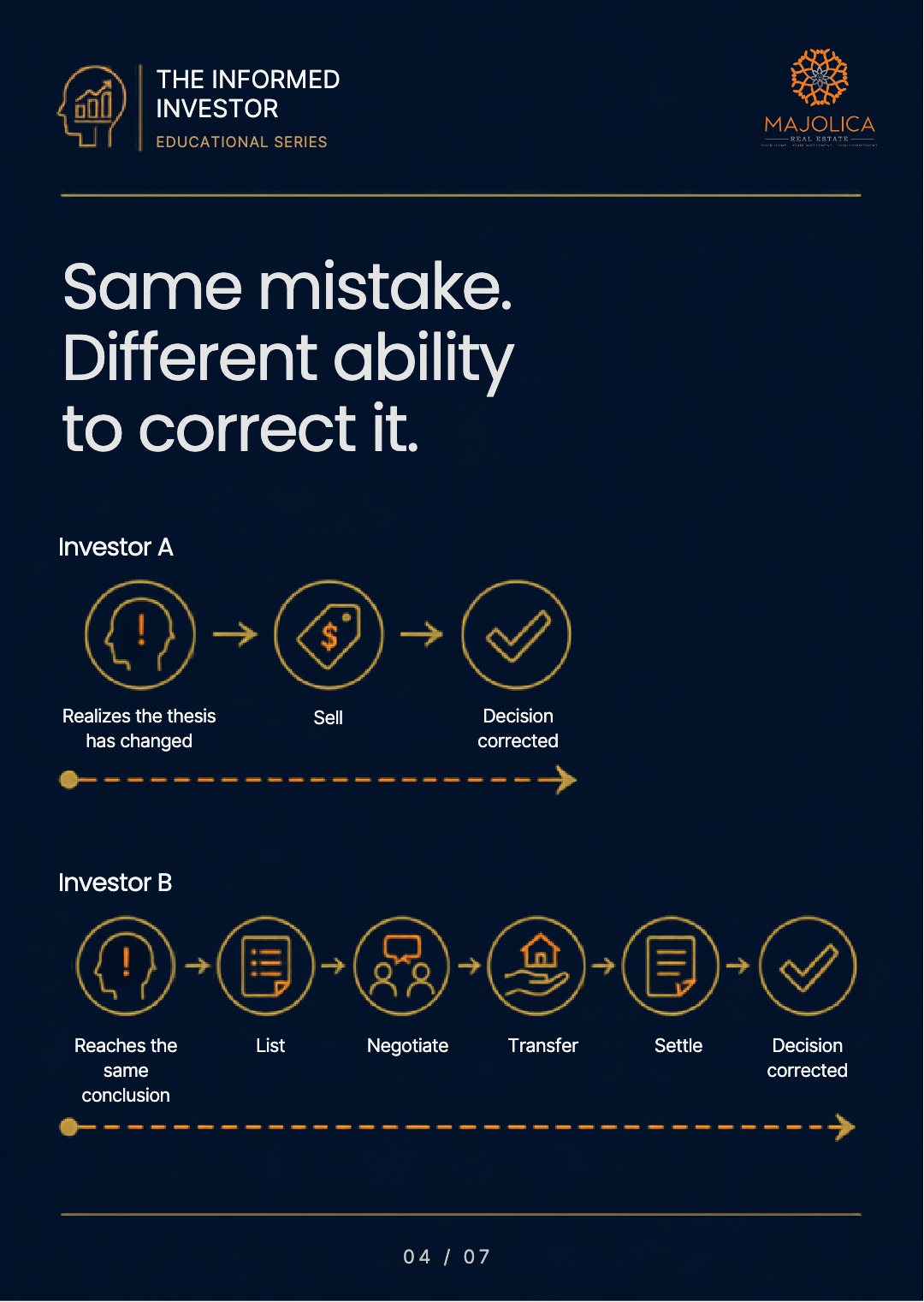
Same mistake. Different ability to correct it.
Investor A realises the thesis has changed, sells, and the decision is corrected. Investor B reaches the same conclusion — and must list, negotiate, transfer and settle before the decision is corrected.
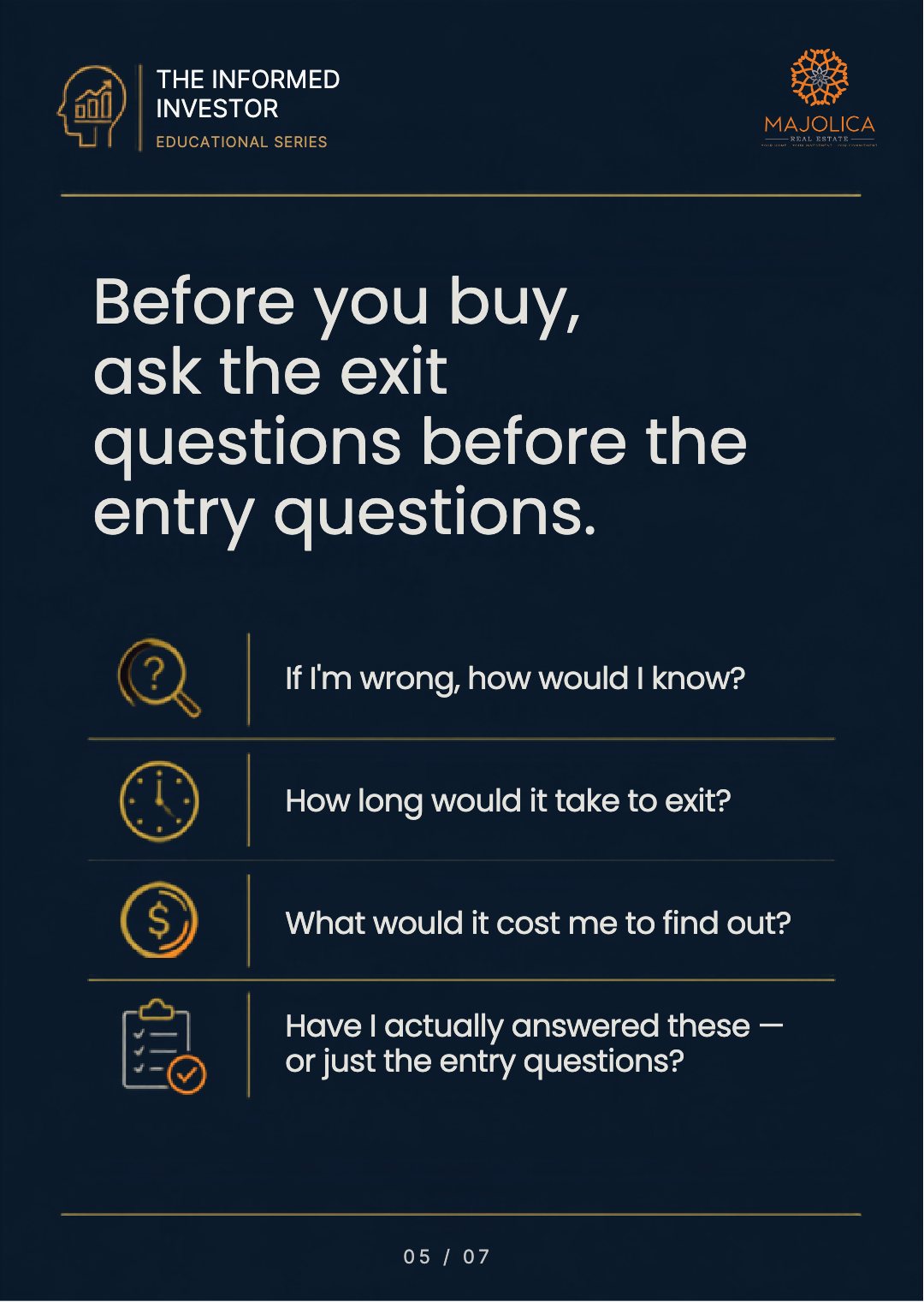
Ask the exit questions before the entry questions
- If I’m wrong, how would I know?
- How long would it take to exit?
- What would it cost me to find out?
- Have I actually answered these — or just the entry questions?
Real estate gives you fewer cheap ways to change your mind
This series has been about decisions — what you give up, what something’s worth, how much room you leave for being wrong. That’s why the quality of the decision matters more before you commit.
The best decisions in real estate aren’t the easiest to make. They’re the ones you don’t need to undo.
If this question applies to your own situation, we are happy to talk it through. Start a conversation
The chapter as published