The Informed Investor · Chapter Seven
Leave room for being wrong.
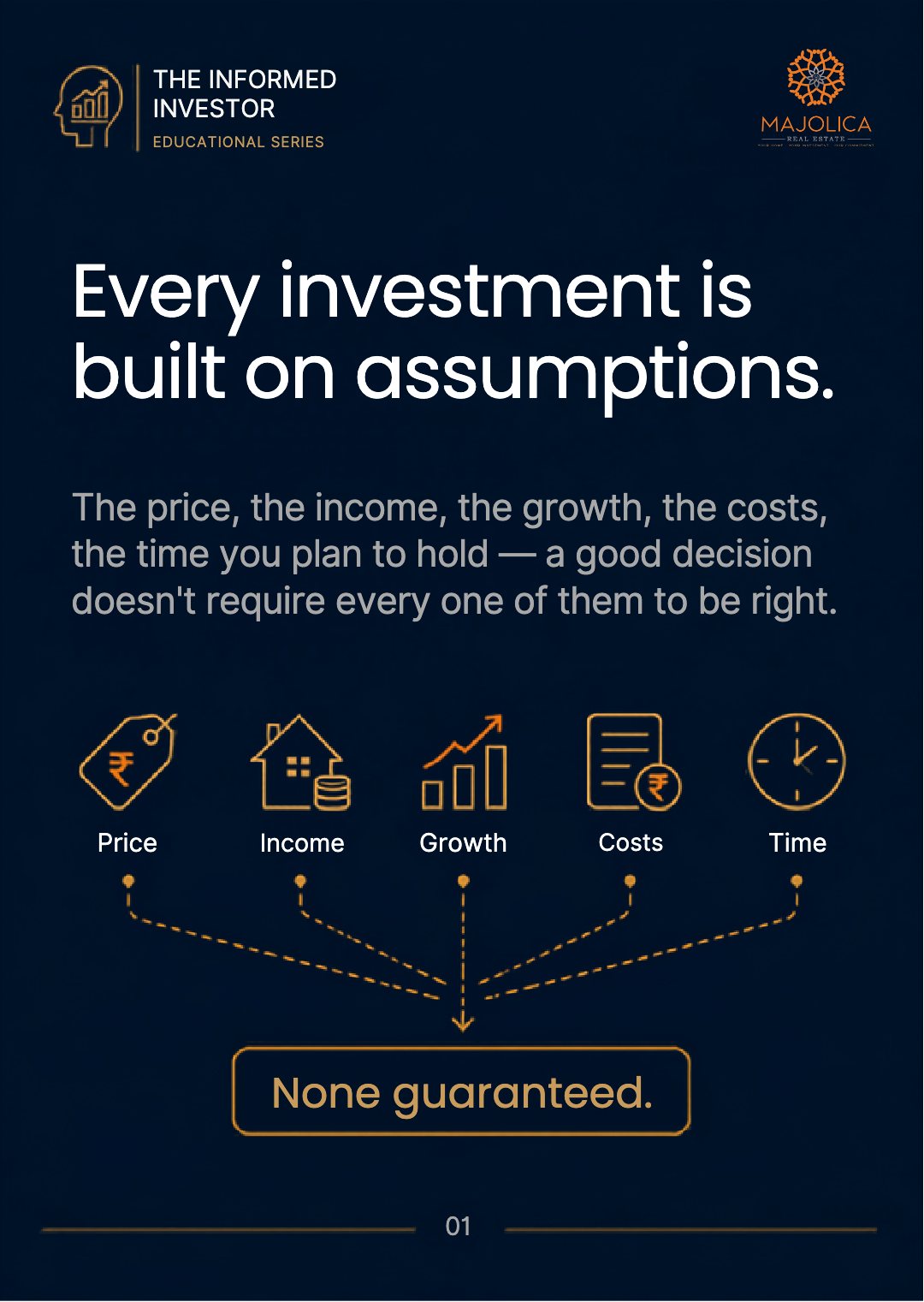
Every investment is built on assumptions
The price, the income, the growth, the costs, the time you plan to hold — a good decision doesn’t require every one of them to be right.
None guaranteed.
What if you’re wrong?
Not catastrophically wrong. Just wrong enough — lower rent, higher costs, a slower market, a delayed exit.
The quality of an investment is revealed not only when things go right — but when they don’t.
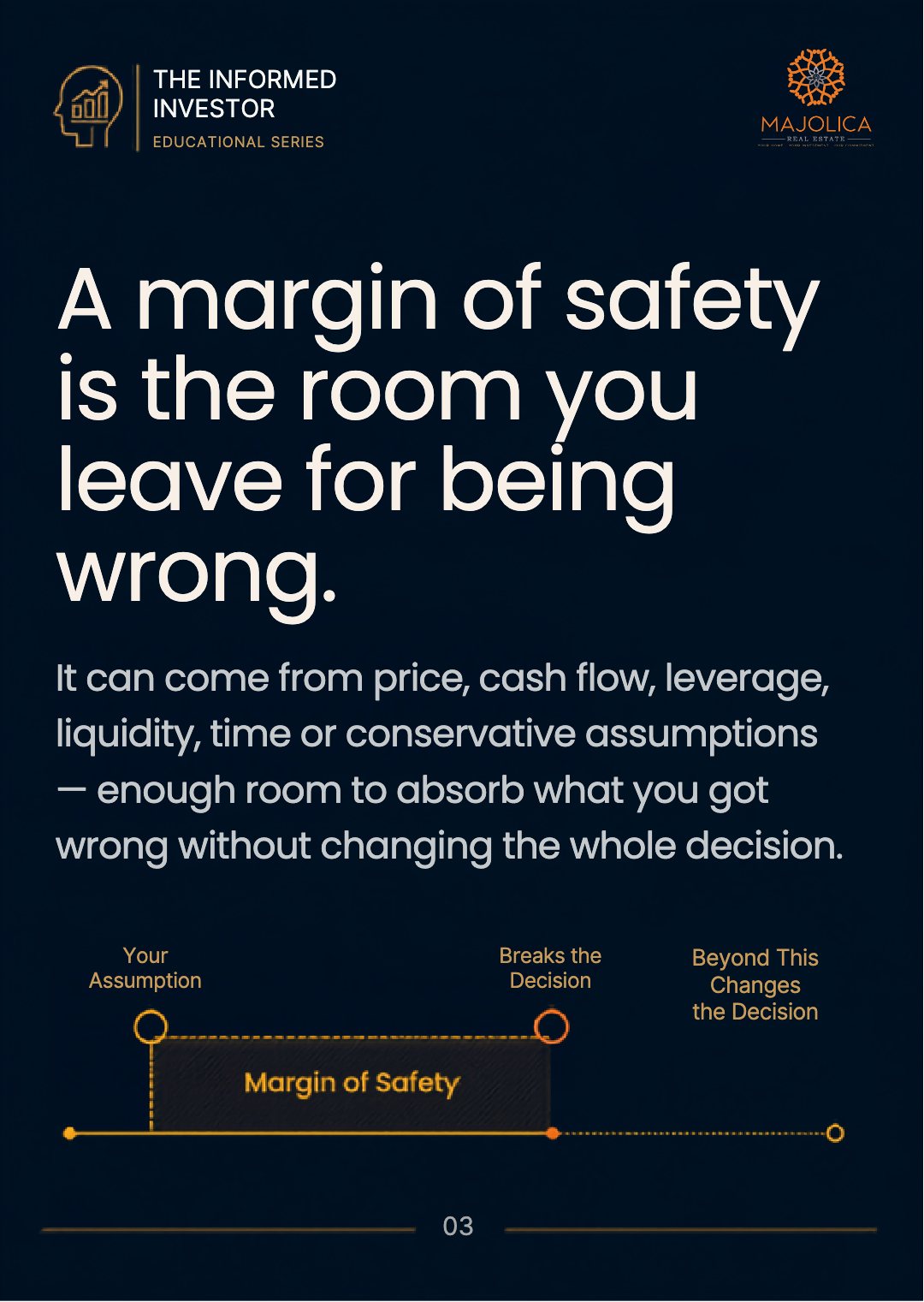
A margin of safety is the room you leave for being wrong
It can come from price, cash flow, leverage, liquidity, time or conservative assumptions — enough room to absorb what you got wrong without changing the whole decision.
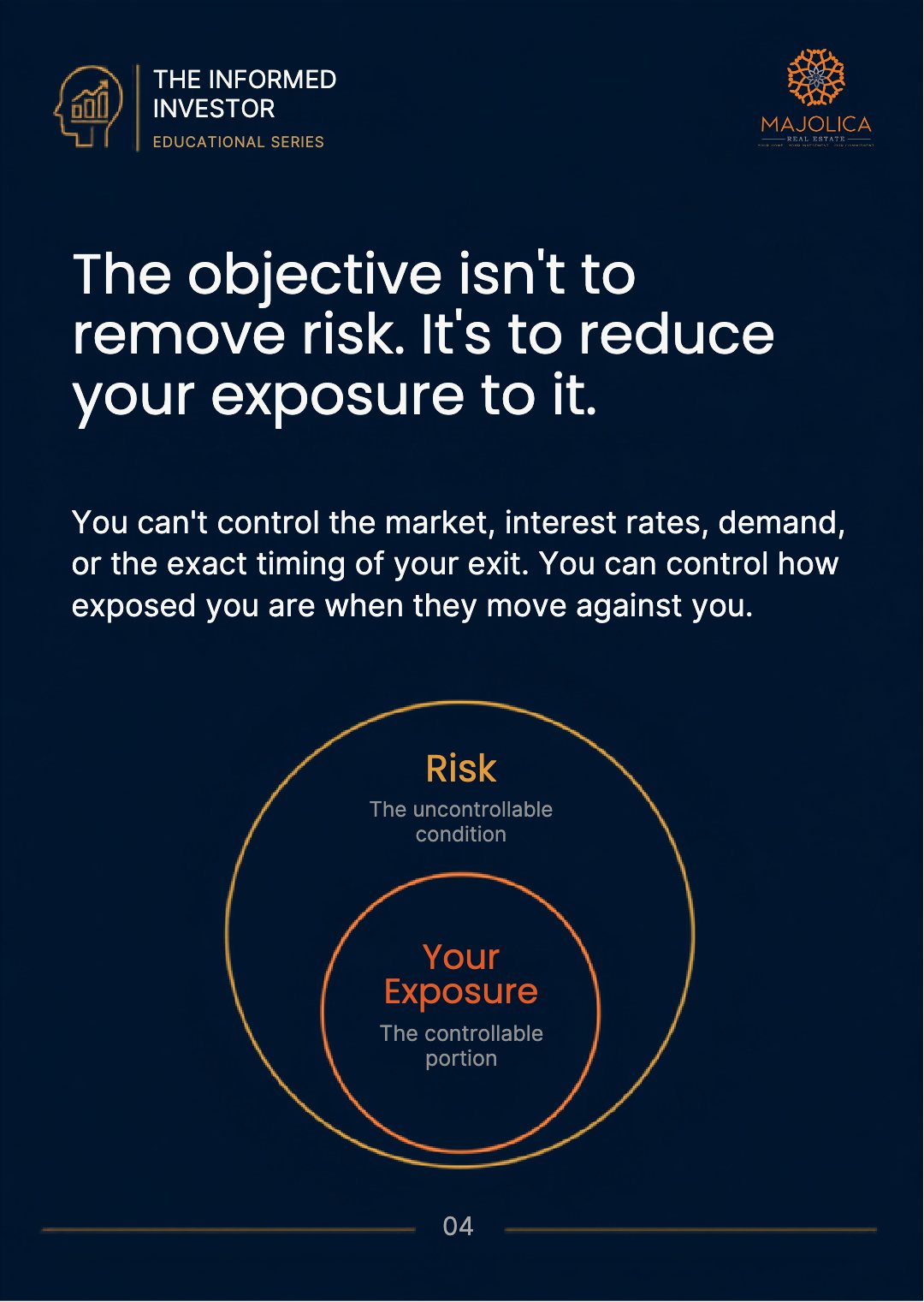
The objective isn’t to remove risk. It’s to reduce your exposure to it.
You can’t control the market, interest rates, demand, or the exact timing of your exit. You can control how exposed you are when they move against you.
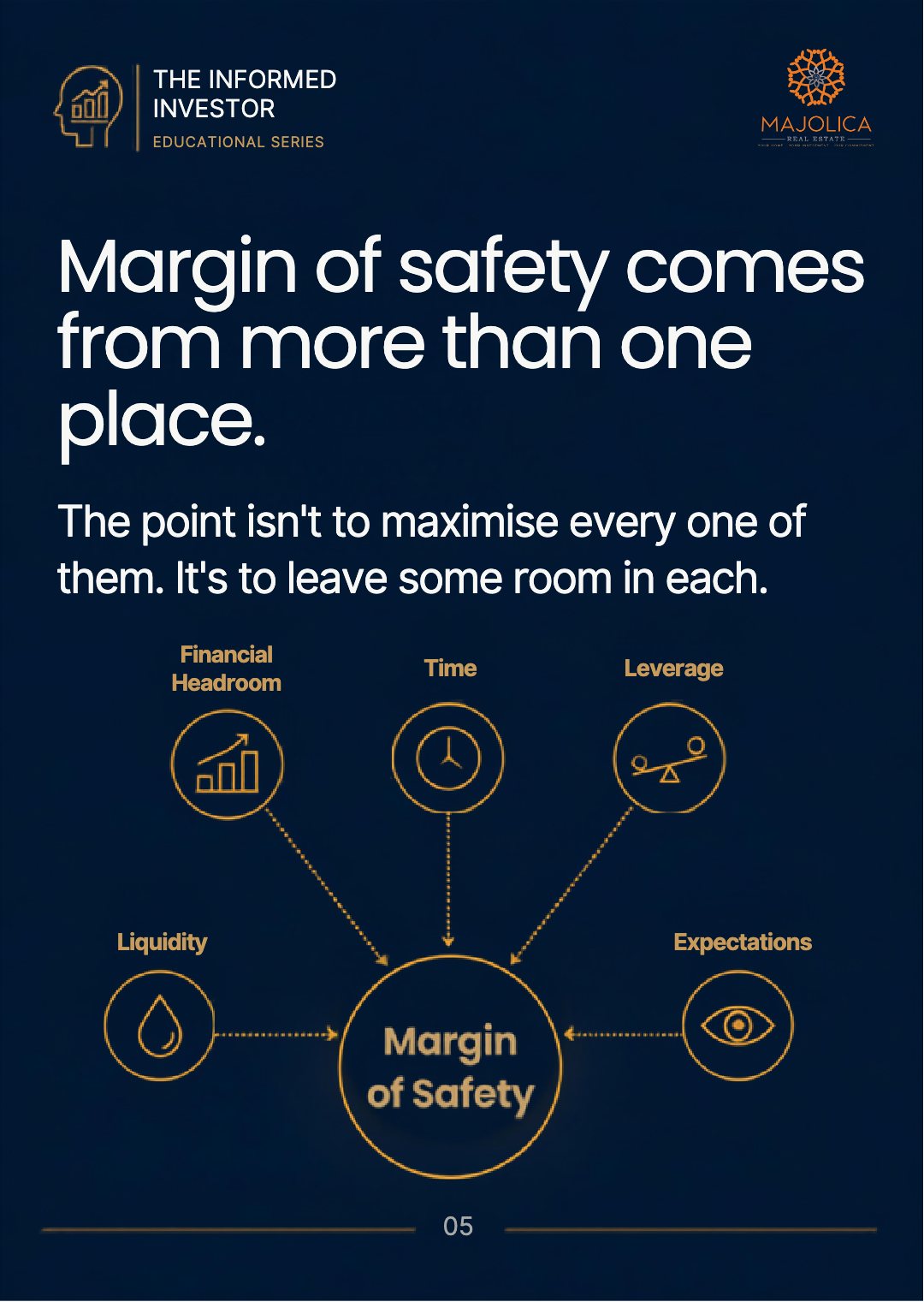
Margin of safety comes from more than one place
Financial headroom. Time. Leverage. Liquidity. Expectations.
The point isn’t to maximise every one of them. It’s to leave some room in each.
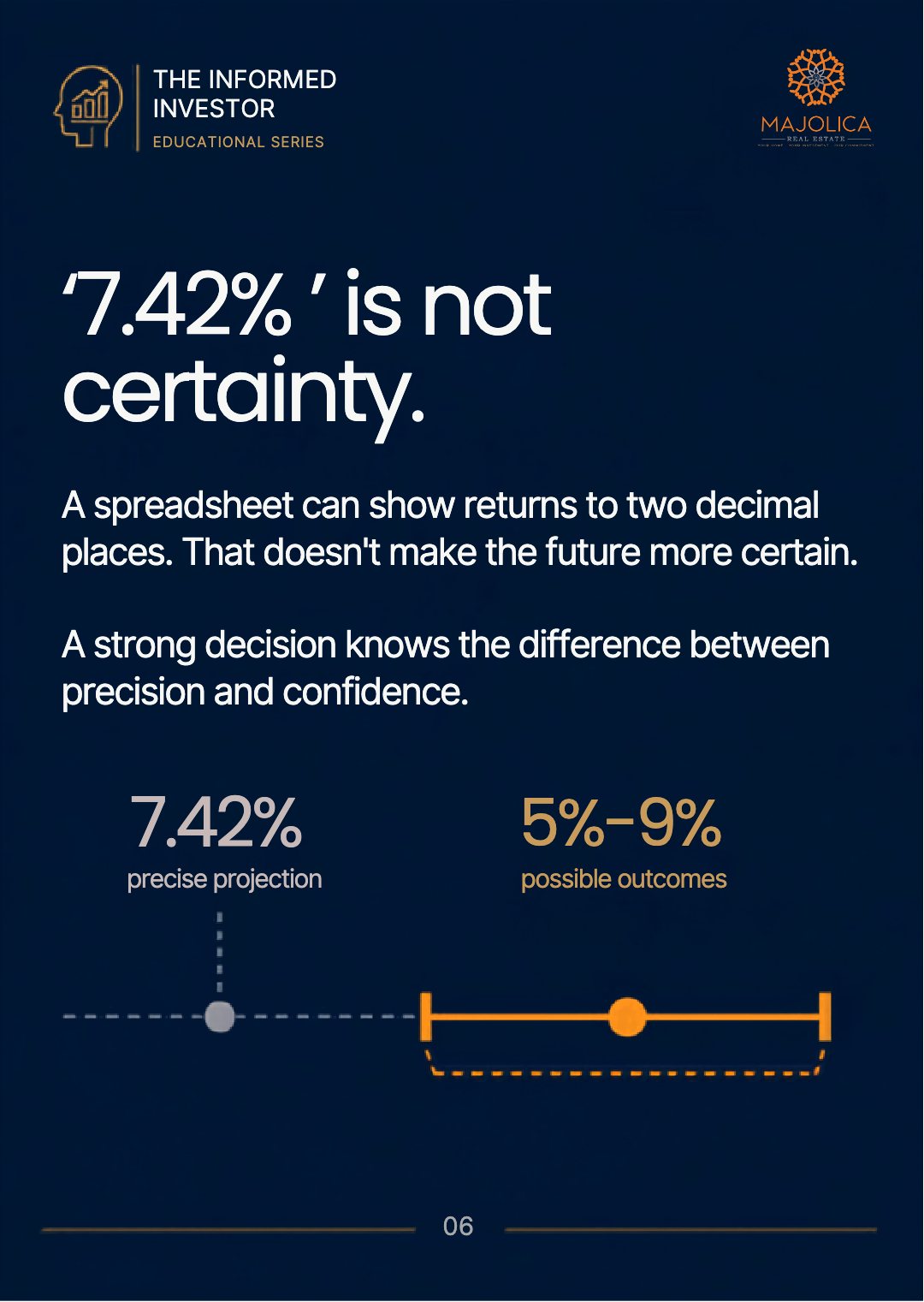
“7.42%” is not certainty
A spreadsheet can show returns to two decimal places. That doesn’t make the future more certain.
A strong decision knows the difference between precision and confidence.
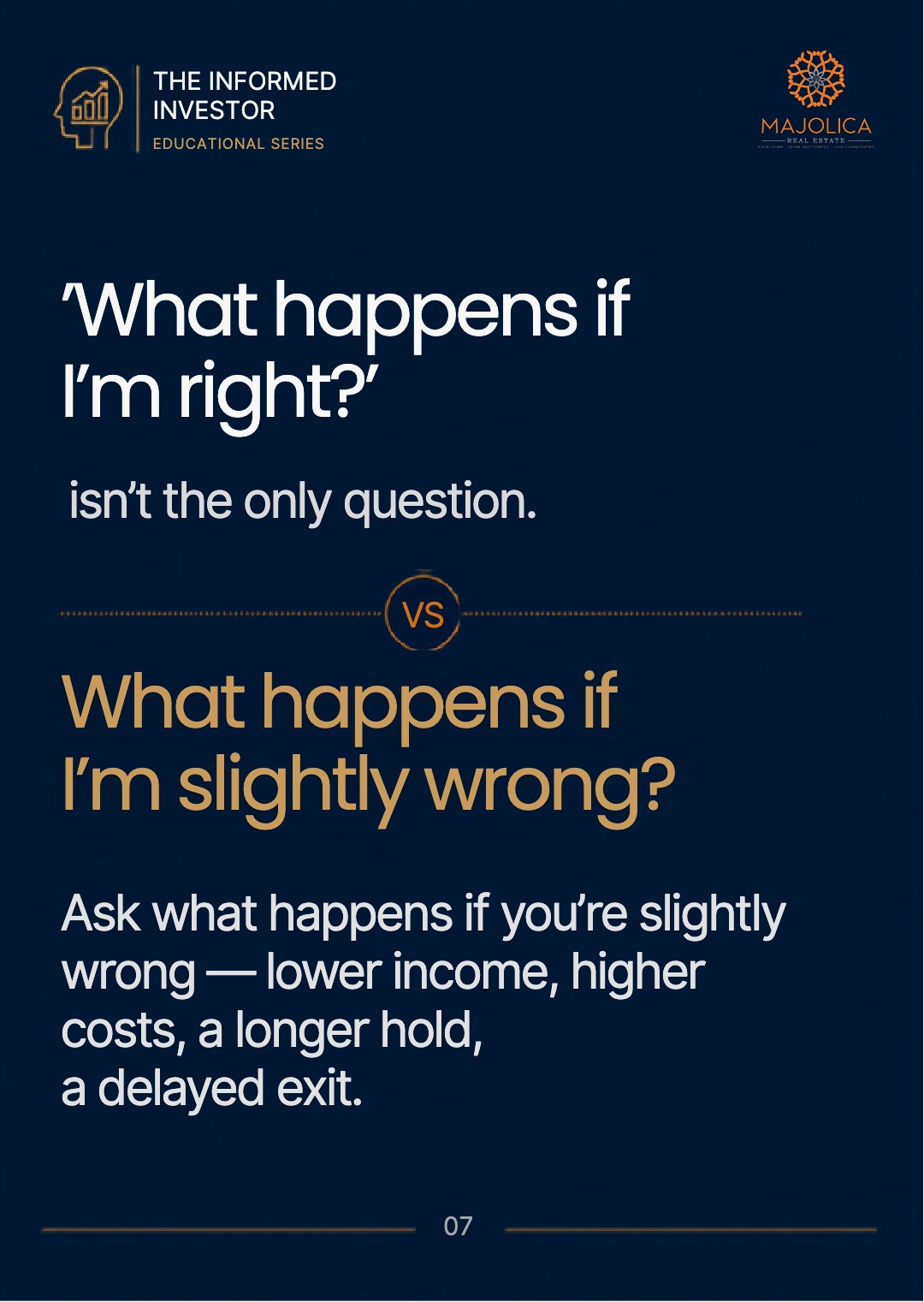
“What happens if I’m right?” isn’t the only question
Ask what happens if you’re slightly wrong — lower income, higher costs, a longer hold, a delayed exit.
Margin of safety isn’t about being conservative. It’s about being prepared.
You don’t need the safest investment. You need one whose risks you can live with when reality differs from the plan.
You don’t have to predict perfectly.
Leave room for being wrong. That’s the whole discipline.
We help investors build in the margin — not just the projection. Start a conversation
The chapter as published