The Informed Investor · Chapter Five
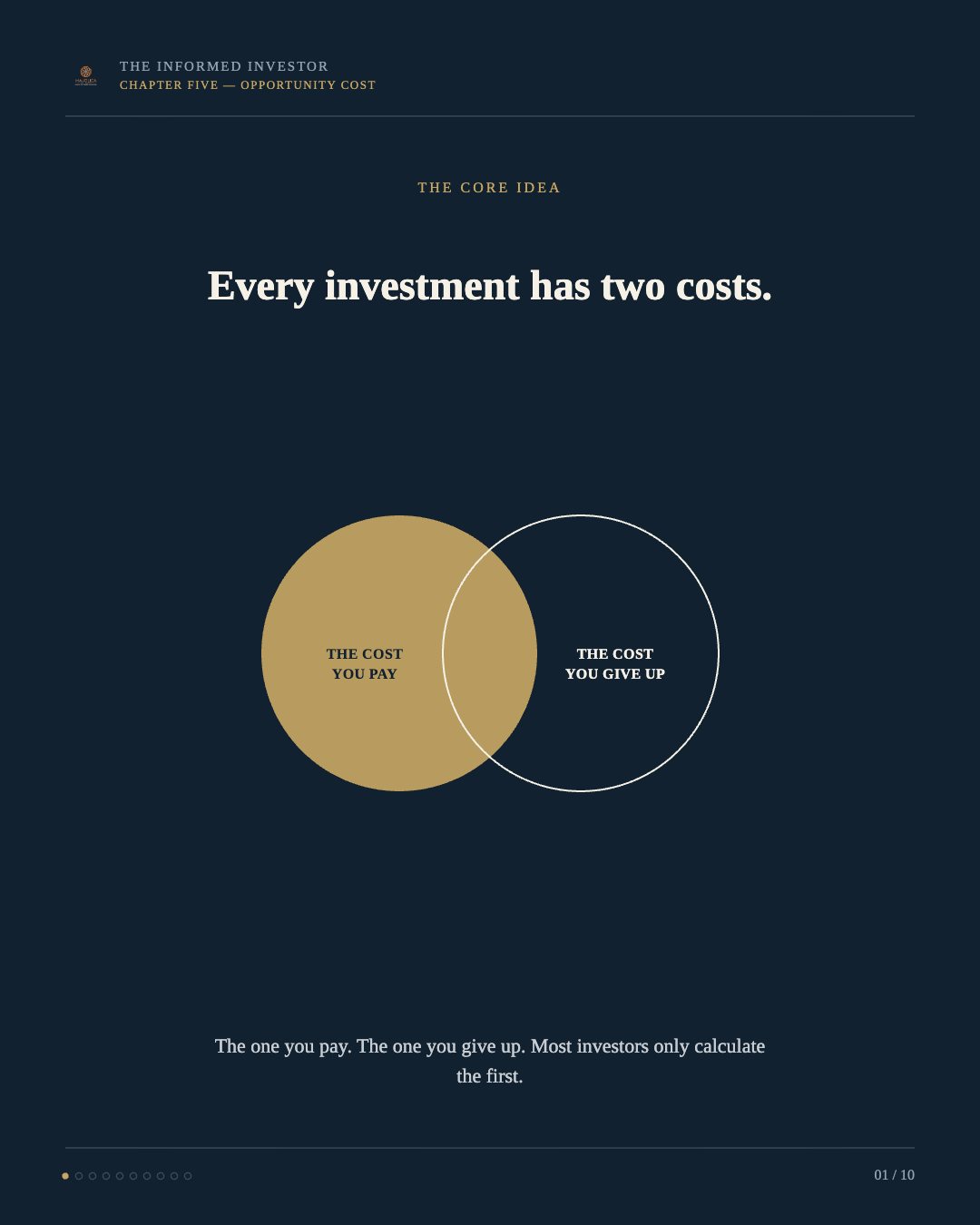
Every investment has two costs.
The one you pay. The one you give up. Most investors only calculate the first.
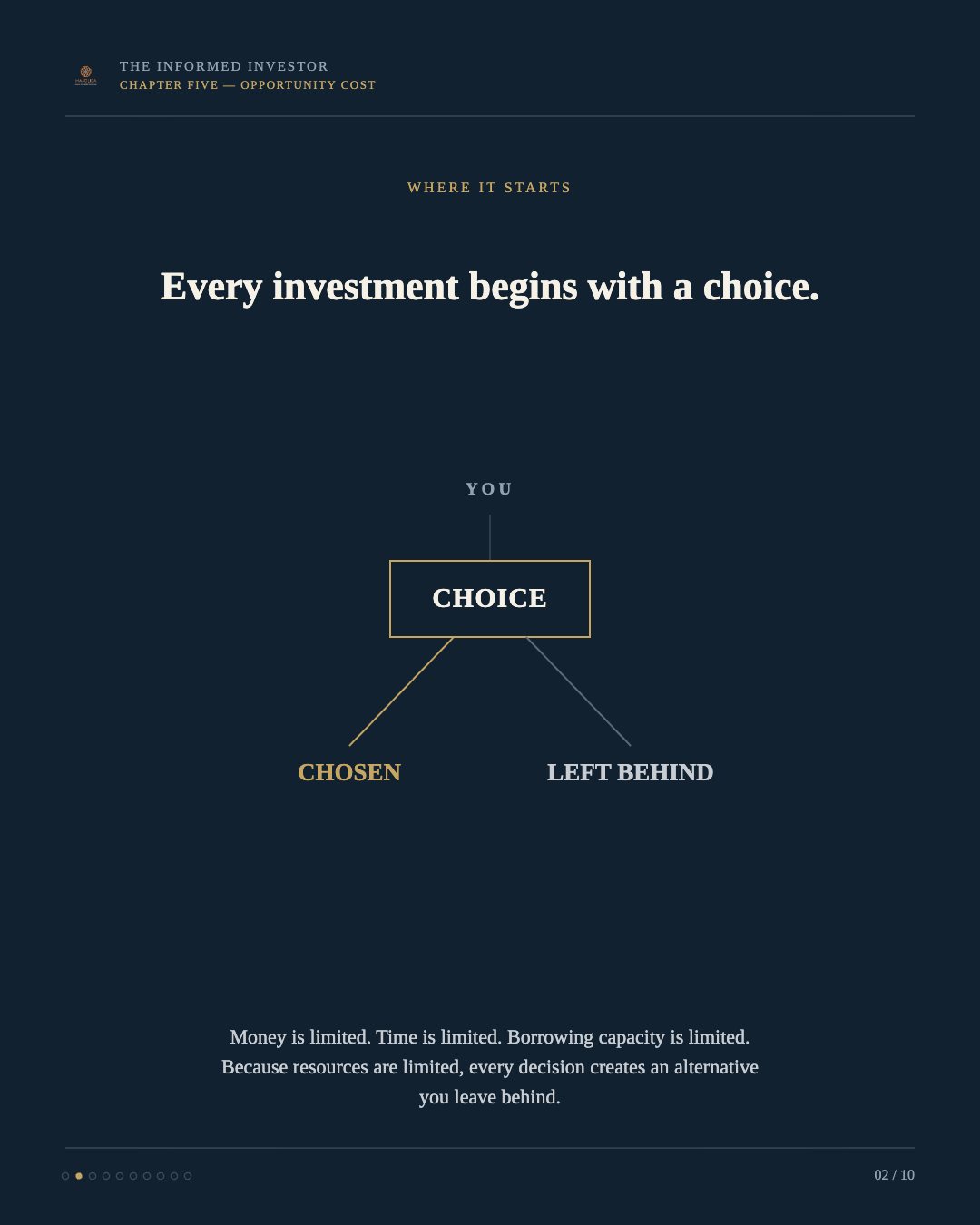
Every investment begins with a choice
Money is limited. Time is limited. Borrowing capacity is limited. Because resources are limited, every decision creates an alternative you leave behind.
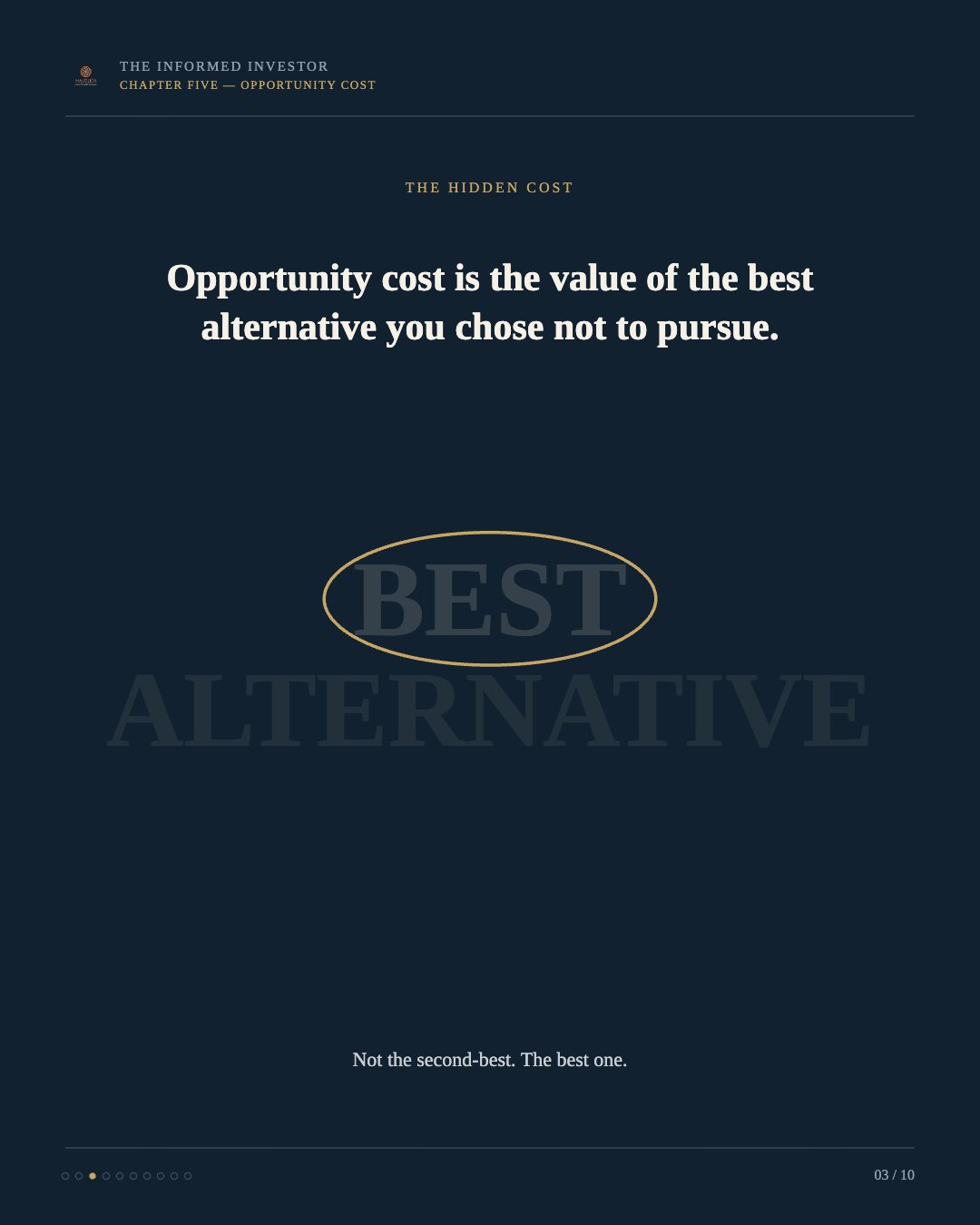
Opportunity cost is the value of the best alternative you chose not to pursue
Not the second-best. The best one.
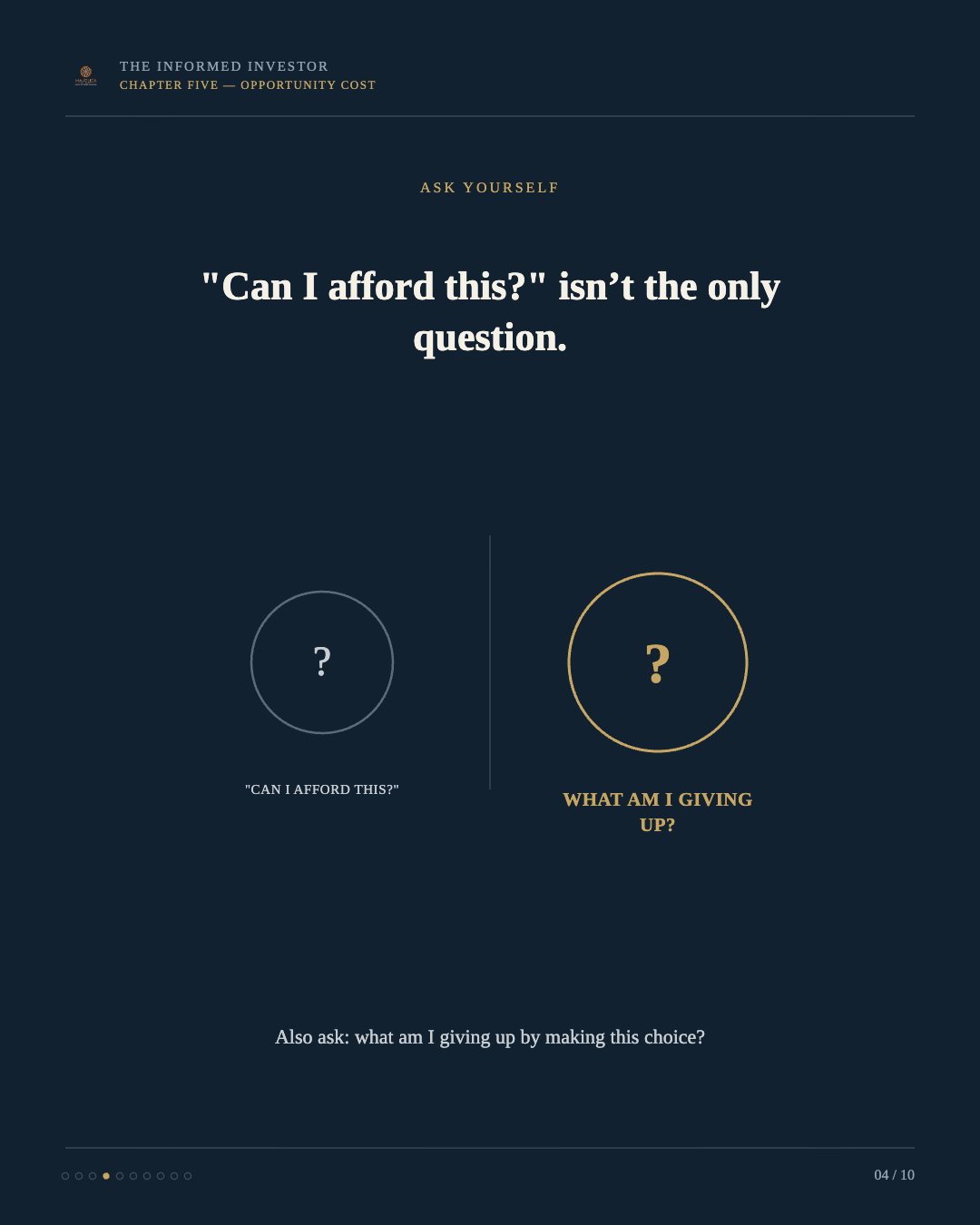
“Can I afford this?” isn’t the only question
Also ask: what am I giving up by making this choice?
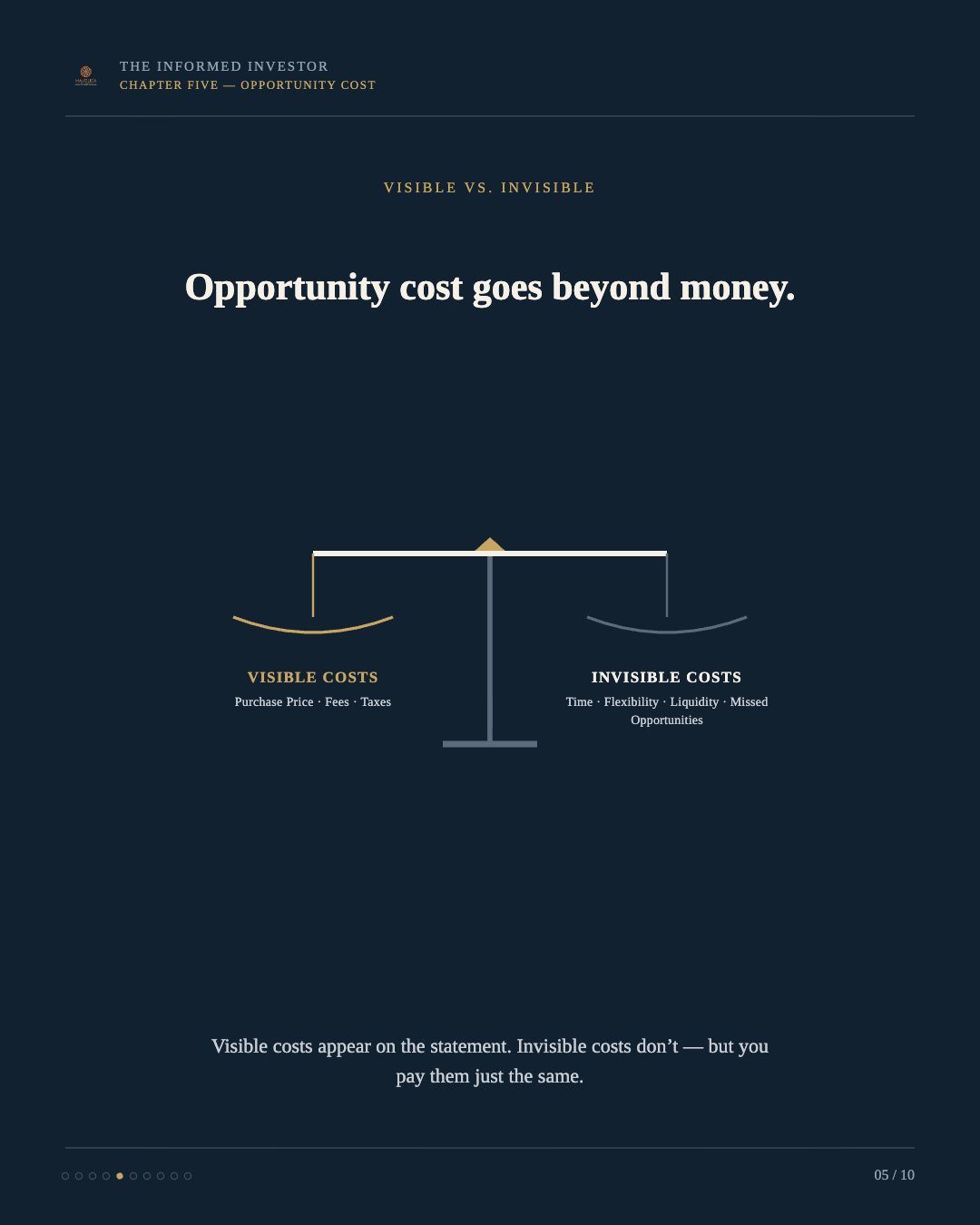
Opportunity cost goes beyond money
- Visible costs — purchase price, fees, taxes.
- Invisible costs — time, flexibility, liquidity, missed opportunities.
Visible costs appear on the statement. Invisible costs don’t — but you pay them just the same.
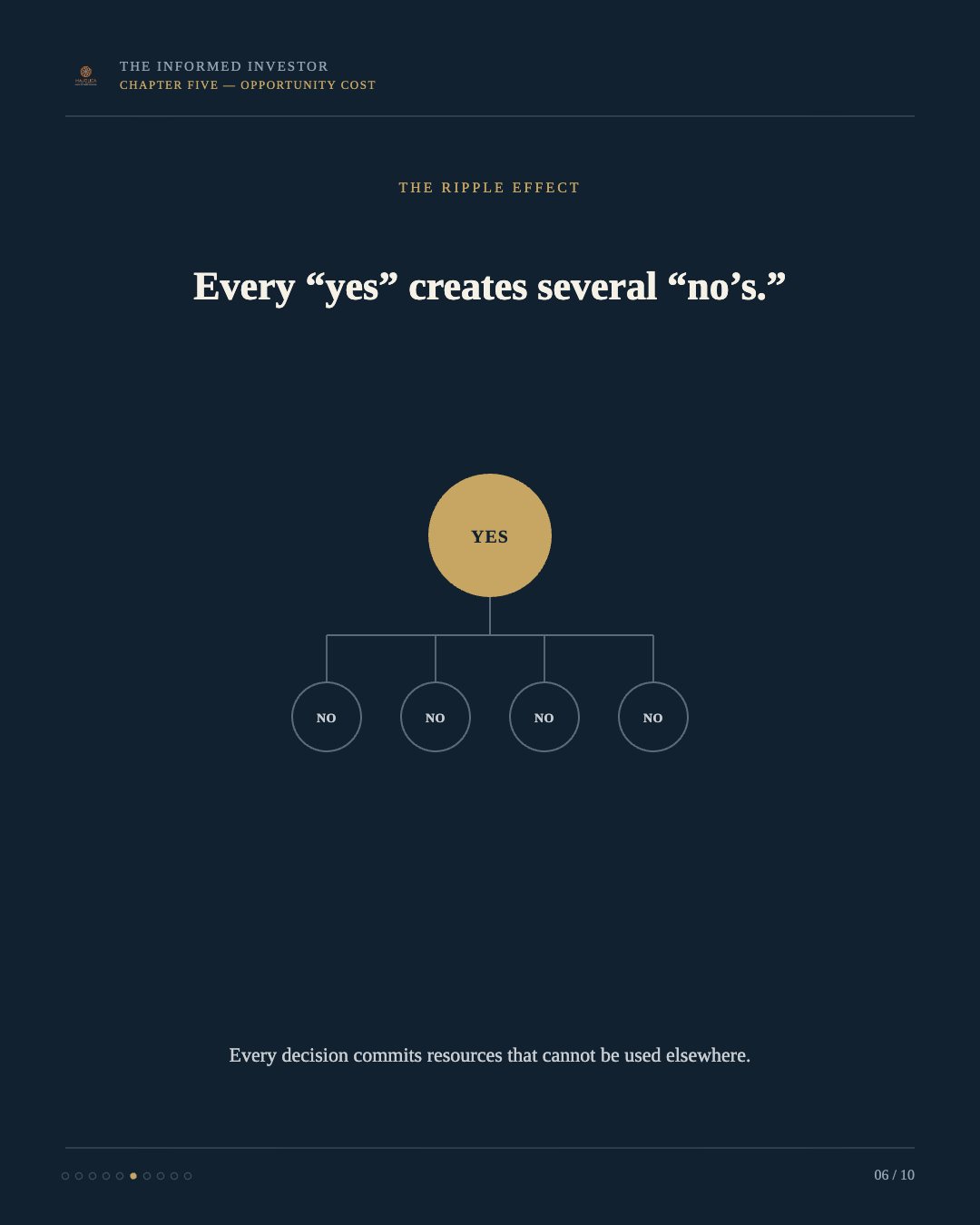
Every “yes” creates several “no’s”
Every decision commits resources that cannot be used elsewhere.
Think like a portfolio
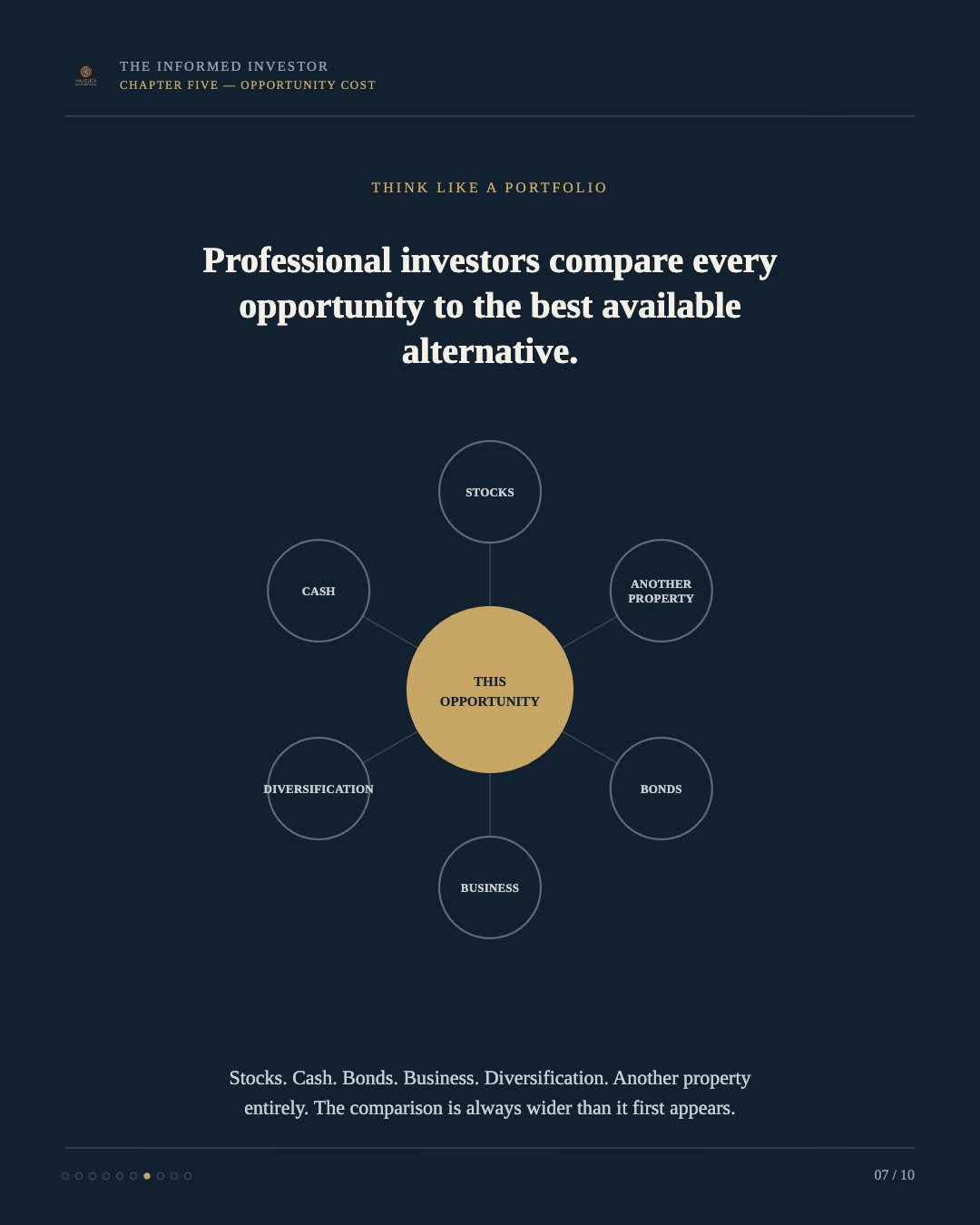
Professional investors compare every opportunity to the best available alternative.
Stocks. Cash. Bonds. Business. Diversification. Another property entirely. The comparison is always wider than it first appears.
The cost you never see
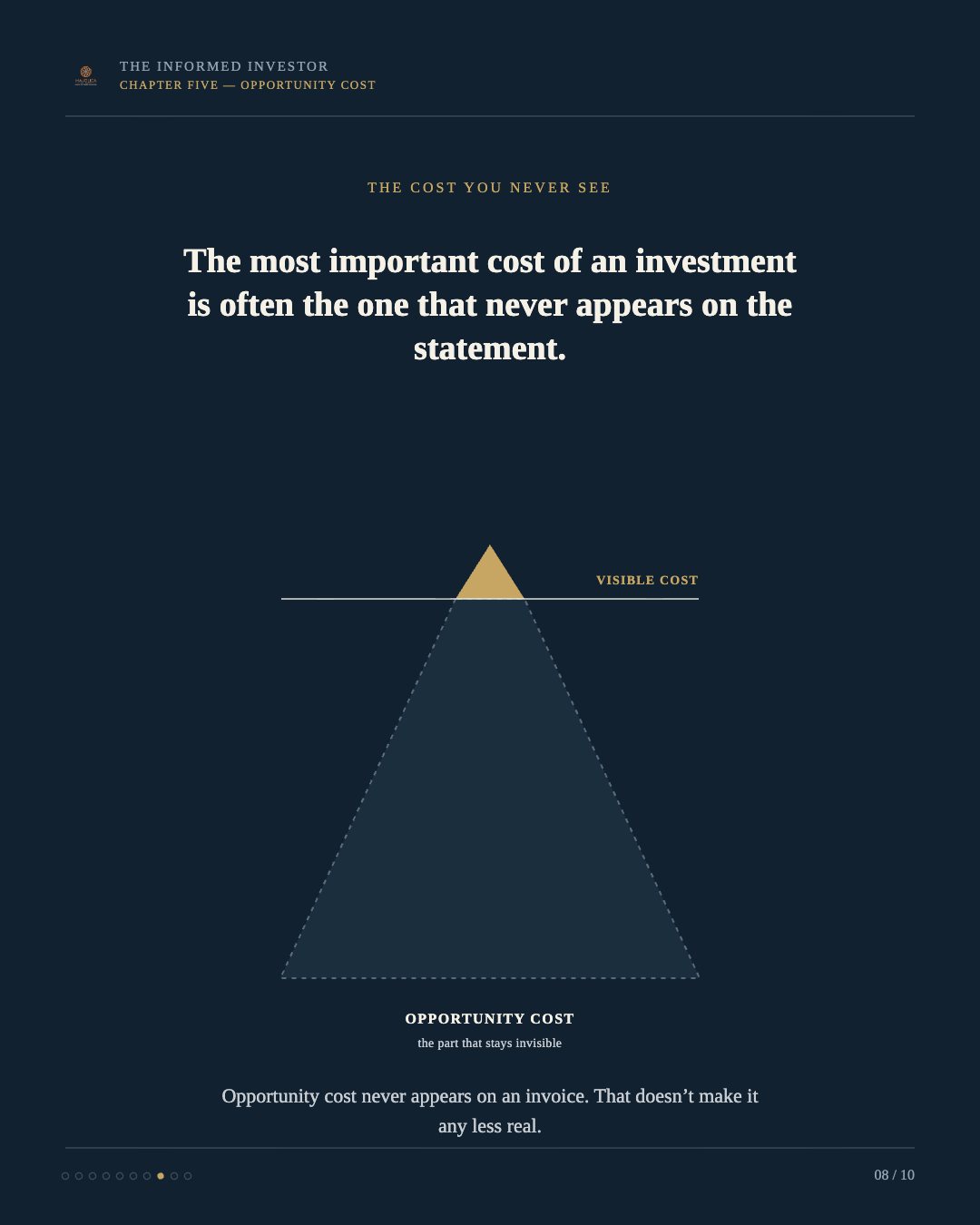
The most important cost of an investment is often the one that never appears on the statement.
Opportunity cost never appears on an invoice. That doesn’t make it any less real.
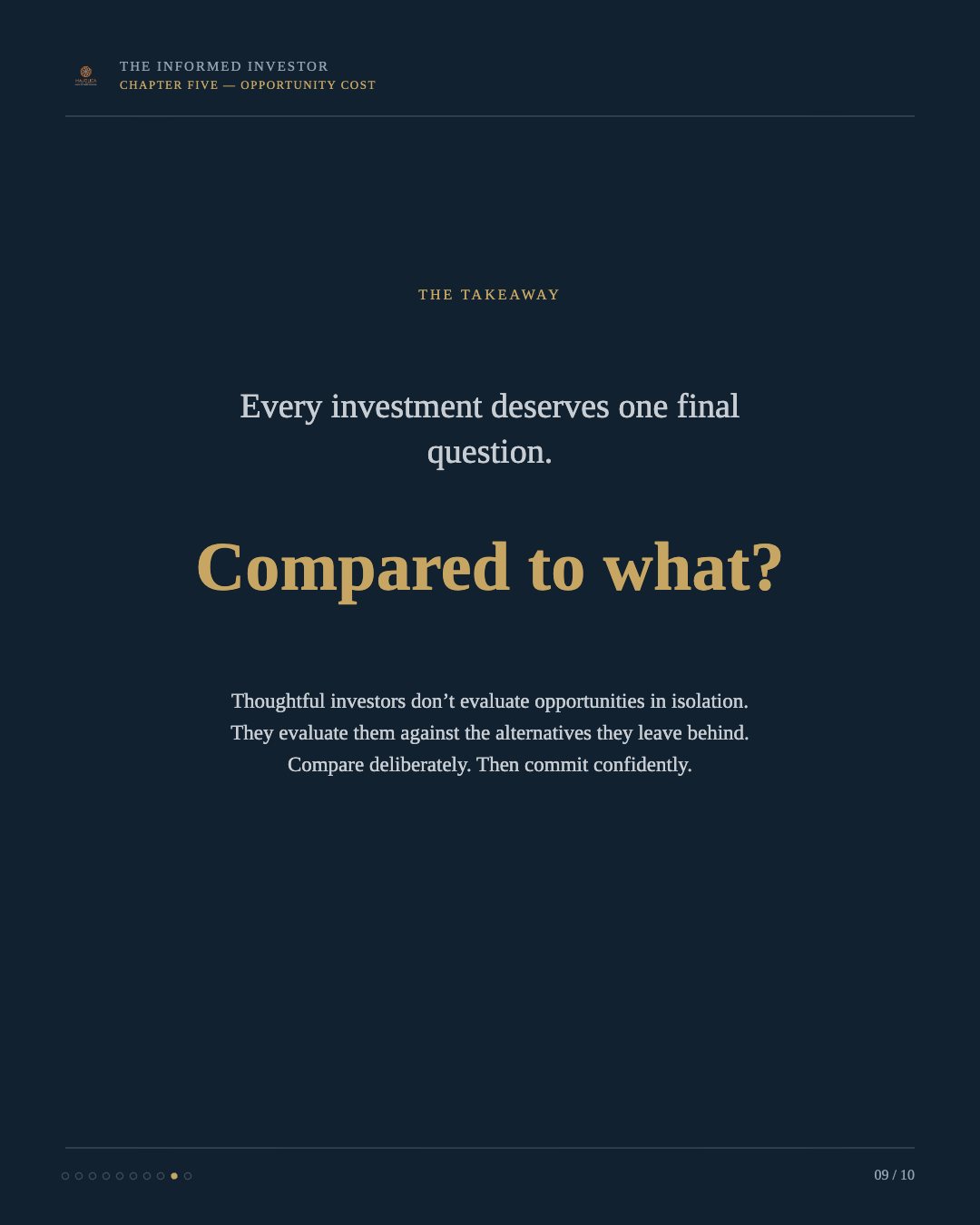
Every investment deserves one final question.
Compared to what?
Thoughtful investors don’t evaluate opportunities in isolation. They evaluate them against the alternatives they leave behind. Compare deliberately. Then commit confidently.
Every decision deserves a comparison. We help investors see the full picture — including the one that never makes it onto a statement. Start a conversation
The chapter as published